If you've ever Googled "how much does a website cost" and ended up more confused than when you started you're not alone. Pricing in the web development world ranges from $0 (a free Wix trial) to $500,000+ (a custom enterprise platform). That gap isn't a mistake; it reflects a genuinely wide spectrum of complexity, strategy and quality.
This guide cuts through the noise. Whether you're a small business owner in Chicago, a startup founder in Los Angeles, or a retail brand in New York exploring e-commerce, you'll walk away knowing exactly what drives website costs in the USA in 2026 and how to budget confidently.
Before diving into the details, here's a quick-reference breakdown:
| Website Type | Typical Cost Range (USA, 2026) |
| Simple Informational / Brochure Site | $1,500 – $5,000 |
| Small Business Website (5–15 pages) | $5,000 – $15,000 |
| Mid-Size Business Website | $15,000 – $40,000 |
| E-Commerce Website | $10,000 – $75,000+ |
| Custom Web Application / Portal | $40,000 – $200,000+ |
| Enterprise Website | $100,000 – $500,000+ |
These ranges reflect professionally built websites not DIY builders or offshore freelance mills. They account for design, development, content integration, SEO foundations and testing. Keep reading to understand exactly what moves the needle within each range.
The single biggest mistake businesses make when shopping for a website is treating it like a commodity with a fixed price. A website isn't a product you pull off a shelf, it's a custom-engineered digital asset. Its cost depends on several intersecting factors:
Your three main options are freelancers, boutique agencies and full-service digital agencies. Each comes with different price points and trade-offs.
Freelancers: typically charge between $50 and $150 per hour in the USA, though highly specialized developers command $175–$250/hour. They're often a good fit for straightforward projects with a defined scope. The risk: limited bandwidth, no backup and no integrated team for design, dev and SEO simultaneously.
Boutique agencies: (teams of 5–20 people) generally range from $100–$200/hour and are well-suited for small to mid-size business websites. They offer more accountability than solo freelancers and often have established workflows.
Full-service agencies: typically bill at $150–$300/hour and handle everything from brand strategy and UX research to development, SEO and post-launch optimization. If you want a site that genuinely performs not just looks good this tier is worth the investment.
Many clients prefer fixed-price website packages because they offer predictability. Agencies quote a flat rate based on a defined scope of work, a specific number of pages, a defined feature set and agreed design rounds.
The catch? Scope creep is real. If you request additions mid-project, costs climb. A fixed-price quote only protects you when the scope is airtight from day one.
Hourly billing works better for projects where requirements evolve complex web applications, custom integrations, or sites undergoing iterative redesign. You pay for actual time, which can be more or less than a fixed-price estimate depending on project complexity.
Web design pricing in New York, Los Angeles, San Francisco and Chicago tends to run 15–30% higher than national averages due to the local cost of living and market competition for skilled talent.
Remote-first agencies have partially flattened these differences since 2020, but location still matters, especially for clients who want in-person collaboration.
A website that uses a pre-built theme with minor customization costs far less than one designed from scratch to your brand's exact specifications. Custom design requires more hours in wireframing, UI design, client review cycles and responsive adaptation across devices.
In 2026, clients increasingly expect:
Each of these has a real cost in design and development hours.
A basic informational website, five pages, a contact form, Google Maps is relatively inexpensive to build. The moment you start adding complexity, costs rise:
Every integration is its own mini-project: scoping, development, testing and documentation.
This covers a basic digital presence typically 3–5 pages (Home, About, Services, Contact), a pre-built or lightly customized theme, basic on-page SEO and a contact form.
Best for: Sole proprietors, local service businesses, early-stage startups needing a quick online presence.
What you get: A clean, functional site that communicates who you are and how to reach you. Don't expect sophisticated lead generation features at this tier.
What you don't get: Custom design, content strategy, conversion optimization, or ongoing support.
This is the most common tier for established small businesses. It typically includes 8–15 pages, a semi-custom or fully custom design, mobile optimization, basic SEO setup, social media integration and a content management system (CMS) like WordPress so you can update content yourself.
Best for: Local and regional businesses, professional service firms, restaurants, healthcare practices, real estate agencies.
What drives costs toward $15,000: Custom design vs. template, number of pages, quality of copywriting, integration of review systems, appointment booking, or live chat.
What to watch for: Agencies that quote $3,000 for a "small business website" are typically delivering a templated, cookie-cutter product. In a competitive market, that's rarely enough to stand out or convert visitors into leads.
At this level, you're investing in a website that functions as a genuine marketing and sales asset not just a digital brochure. Expect custom design with a distinct visual identity, 15–40 pages, advanced SEO architecture, conversion-optimized landing pages, analytics setup and possible integrations with your CRM or marketing automation platform.
Best for: Growing businesses, B2B companies, multi-location service providers, professional services firms with complex offerings.
What separates good from great: UX research and strategy. The best agencies at this tier don't just build what you describe, they challenge assumptions, test assumptions against user behavior and design for measurable outcomes (leads, calls, form submissions).
E-commerce is where costs become most variable because the complexity spectrum is enormous. A 50-product Shopify store with a custom theme is a very different project from a 10,000-SKU WooCommerce catalog with custom filtering, inventory management integration and a B2B wholesale portal.
Key cost drivers for e-commerce:
Platform note for 2026: Shopify remains dominant for small-to-mid-size e-commerce in the USA, while WooCommerce on WordPress offers more customization flexibility. Headless commerce architectures (decoupling the front-end from the back-end) are growing in popularity for brands needing high performance and unique UX, but they command a significant cost premium typically $50,000–$150,000+.
If your business process requires users to log in, manage data, interact with a dashboard, or use custom workflows, you're looking at a web application not just a website. This category includes SaaS platforms, client portals, HR systems, booking engines, inventory dashboards and more.
These projects require dedicated software architects, back-end developers, front-end engineers, QA testers and project managers. Discovery and scoping alone can take 4–8 weeks and cost $5,000–$20,000 before a single line of production code is written.
Large corporations, healthcare systems, financial institutions and government entities require websites that go far beyond standard marketing sites. Enterprise projects involve governance frameworks, accessibility audits, security hardening, multi-stakeholder approval processes, content migration from legacy systems, multi-brand or multi-region architecture and deep integration with internal IT infrastructure.
The initial build cost is only part of the story. Here are costs that frequently catch businesses off guard:
Domain names typically cost $15–$20/year. Hosting varies enormously:
Almost always included in managed hosting plans, but worth confirming. A valid SSL certificate is non-negotiable for SEO and user trust in 2026.
If your site runs on WordPress or another CMS, expect to pay for premium plugins form builders, SEO tools, page builders, backup solutions, security scanners. Budget $300–$1,500/year for a well-equipped WordPress site.
Professional photos matter. Stock photography licenses from Shutterstock, Getty, or Adobe Stock run $0.26–$9.99 per image (on subscription plans) to $300+ per image for extended licenses. A site needing 20–40 images can add $500–$3,000 in licensing costs.
Many agencies quote web design without copywriting. If you need professionally written page content, expect to pay $150–$500 per page depending on complexity. A 15-page site could add $3,000–$7,500 to the project.
Websites are not a build-it-and-forget-it investment. Expect to budget for:
A beautiful website that no one finds is a wasted asset. If you're serious about organic traffic, budget for ongoing SEO services in addition to your web development costs. For small businesses, foundational SEO starts at $750–$2,500/month. Learn more about how SEO services work alongside your website to drive sustainable traffic and leads.
Let's make this concrete. A $15,000 professionally built website from a reputable U.S. agency typically includes:
Discovery & Strategy (10–15 hours)
Design (20–30 hours)
Development (30–50 hours)
Testing & Launch (8–12 hours)
Post-Launch Support
When you receive proposals, here's how to assess them fairly:
1. Look for discovery and strategy time. An agency that jumps straight to design without a discovery phase is building without understanding your business. That's a red flag.
2. Ask how many revision rounds are included. Two rounds is standard. Unlimited revisions sounds attractive until you realize it usually means vague scope and padding elsewhere.
3. Confirm who's doing the work. Some agencies sell in the USA but outsource development internationally. There's nothing inherently wrong with this, but you should know it and evaluate accordingly.
4. Review their portfolio for clients similar to you. A great portfolio for restaurants doesn't guarantee expertise in B2B SaaS. Niche experience matters.
5. Ask about post-launch support. What happens when something breaks two months after launch? Get the answer in writing.
6. Check references. Ask the agency for two or three client references you can actually call. An agency confident in its work will provide them without hesitation.
The web development industry has no formal licensing requirements, which means anyone can call themselves a web developer. Watch out for:
While many high-quality agencies work remotely with clients anywhere in the USA, your geographic market still matters for a few reasons:
Website Cost New York: NYC agencies often specialize in specific industries finance, fashion, media, hospitality with deep sector expertise that justifies premium rates. If you operate in one of these verticals, a NYC-based agency may understand your audience better than a generalist elsewhere.
Web Design Price Los Angeles: The LA market is strong for creative industries entertainment, consumer brands, influencer businesses. Strong creative talent and competitive rates (often $100–$175/hour at boutique agencies) make LA agencies a compelling choice for brand-forward projects.
Website Development Chicago: Chicago has a robust B2B technology ecosystem. Agencies here often excel at enterprise-grade development, complex integrations and industrial or professional services clients.
Regardless of geography, ask any agency you're considering whether they work with clients remotely and how they manage projects across time zones. In 2026, physical proximity to your agency is largely optional.
Several macro trends are reshaping website development pricing in 2026:
AI-Assisted Development: AI coding tools (GitHub Copilot, Cursor and others) have accelerated development timelines particularly for boilerplate code and repetitive tasks. The best agencies are passing some of these efficiency gains to clients. However, AI doesn't replace strategic thinking, custom design, or complex integrations.
Core Web Vitals and Performance: Google's ongoing emphasis on page speed, interactivity and visual stability means agencies must spend more time on performance optimization. Agencies that ignore this are setting you up for SEO penalties.
Accessibility Compliance: The number of ADA-related web accessibility lawsuits in the USA has steadily increased. Agencies building accessible sites (WCAG 2.1 AA compliant) invest more time in the process, a legitimate cost that protects you legally.
Headless and Composable Architectures: For larger organizations, headless CMS setups (Contentful, Sanity, Storyblok paired with Next.js or Nuxt.js front-ends) offer superior performance and flexibility but require specialized developers. Expect 30–50% higher development costs compared to traditional CMS builds.
Privacy and Cookie Compliance: CCPA requirements in California and growing pressure from other states mean websites now need proper consent management frameworks. Adding a compliant cookie banner and data privacy setup adds $500–$2,500 to most projects.
If your budget is limited, here are strategies to maximize value:
Phase your build: Launch with a solid core site 8–10 pages, clean design, strong conversion elements then add features (blog, e-commerce, portal) in a second phase when budget allows.
Invest in strategy first: The most expensive websites often have the worst ROI because they were built without a clear strategy. A $1,500 strategy engagement before a $10,000 build outperforms a $15,000 build with no strategy.
Separate design from development: Some agencies specialize in one but not the other. Commissioning design from a design-focused studio and development from a development-focused firm can occasionally reduce costs though it adds coordination overhead.
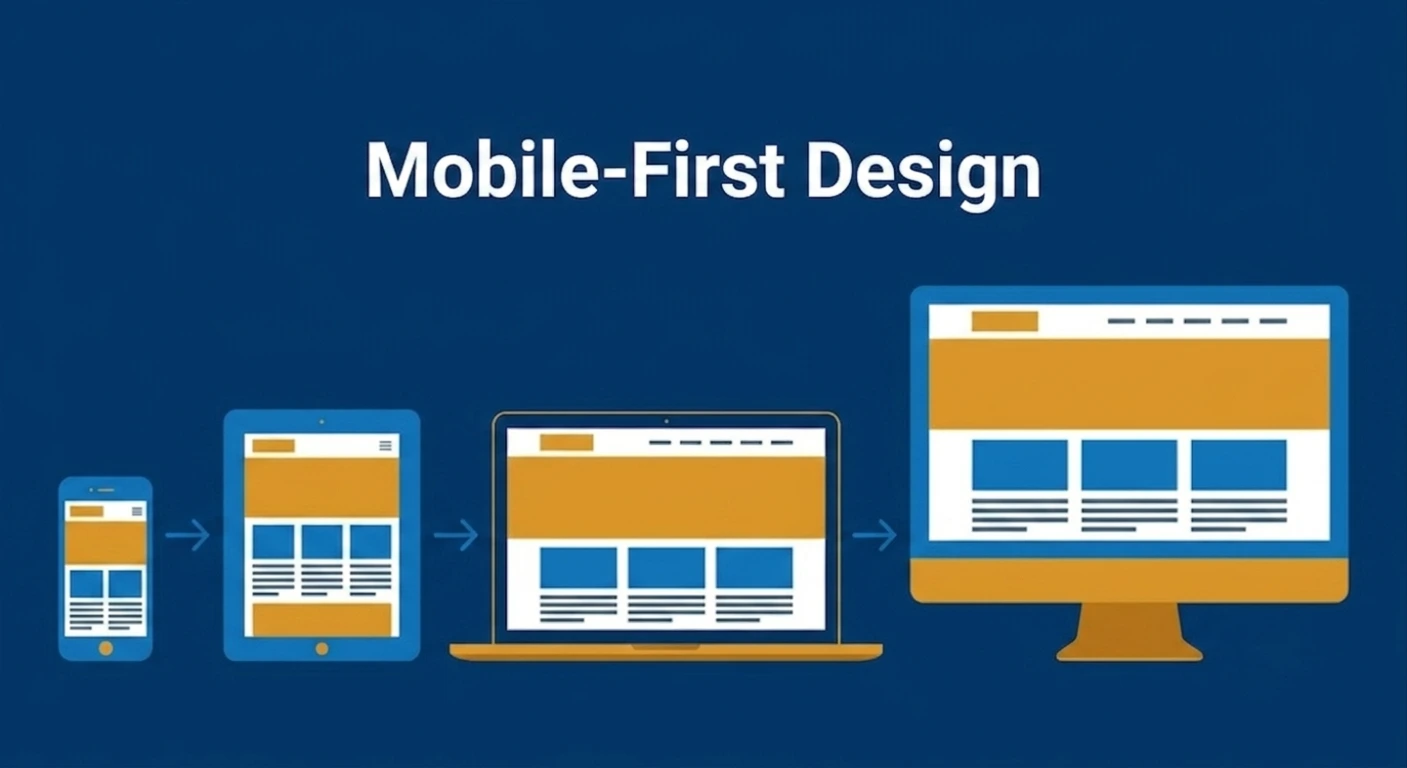
Prioritize mobile performance: More than 60% of web traffic in the USA comes from mobile devices. If budget forces trade-offs, optimize for mobile first.
Plan your content before the project starts: Copywriting and content delays are the single most common cause of website project overruns. Coming to a project with final (or near-final) copy and images saves significant time and money.
At IB2Marketing, we believe in transparent, outcome-focused pricing. We don't quote based on time-and-materials estimates that balloon unpredictably and we don't offer artificially low entry points that require expensive change orders later.
Our engagements begin with a discovery conversation not a sales pitch. We ask questions about your business goals, your existing digital presence, your competition and your target audience. Only then do we propose a scope and investment range that makes sense for your specific situation.
Our website projects are built with SEO architecture embedded from day one not bolted on as an afterthought. Every site we deliver is connected to our broader web development service framework, which means your website is designed to generate traffic, leads and revenue not just look good in a portfolio screenshot.
If you've read this far, you're serious about building a website that actually works for your business, not just checking a box.
The next step is simple: book a free 30-minute cost estimate call with our team. In that conversation, we'll:
No commitment required. No high-pressure pitch. Just a straight conversation with people who've built hundreds of professional websites across the USA.
How much does a website cost in the USA?
A professionally built small business website in the USA typically costs between $5,000 and $15,000 in 2026. Simple brochure sites start around $1,500, while e-commerce sites and custom applications range from $15,000 to $200,000+.
What is the average cost of web design in the USA?
The average cost of professional web design (design only, not development) ranges from $2,500 to $10,000 for a small-to-mid-size business website. Full-service design and development together averages $8,000–$25,000 for most business websites.
How much do web developers charge per hour in the USA?
Hourly web developer rates in the USA range from $50/hour (junior freelancers) to $300/hour (senior developers at premium agencies). The average for mid-level professional work falls between $100–$175/hour.
Is it worth paying for a professional website instead of using Wix or Squarespace?
For personal projects or very simple online presences, website builders like Wix and Squarespace are reasonable options. For businesses that depend on their website for leads, sales, or credibility, a professionally built custom website consistently outperforms builders in SEO performance, conversion rates and scalability.
How long does it take to build a professional website?
Most small business websites take 6–12 weeks from kickoff to launch. Larger sites or e-commerce builds take 3–6 months. Enterprise projects can run 6–18 months.
Can I update my website myself after it's built?
Yes, most professional websites built on WordPress or similar CMS platforms allow you to update content, add blog posts and make minor changes without touching code. Your agency should provide training as part of the delivery.
A Performance Marketing Company Delivering Results-Driven Solutions For Businesses




Have a question? We’d love to hear from you. Send us a message and we’ll get back to you as soon as possible.
Send 609-596-5511