There is a version of SEO that most USA businesses are familiar with. Build backlinks. Write content. Wait six months and hope something moves. That version is not wrong exactly but it skips something important. The work that happens on the page itself before any external signal ever gets considered. On-page SEO is where Google rankings improvement actually begins and for a significant number of websites it is also where the biggest untapped opportunity sits. Not because nobody has heard of on-page optimization but because the gap between knowing it matters and implementing it properly is wider than most people realize until they actually audit a site and see what has been left unaddressed. Pages that should rank are not ranking because the fundamental signals Google uses to evaluate and categorize them are either missing, inconsistent or structured in ways that work against the page rather than for it. Fixing those issues produces faster results than almost any other SEO investment a USA business can make because you are not waiting for external validation. You are improving the signals Google already has direct access to every time it crawls your site.
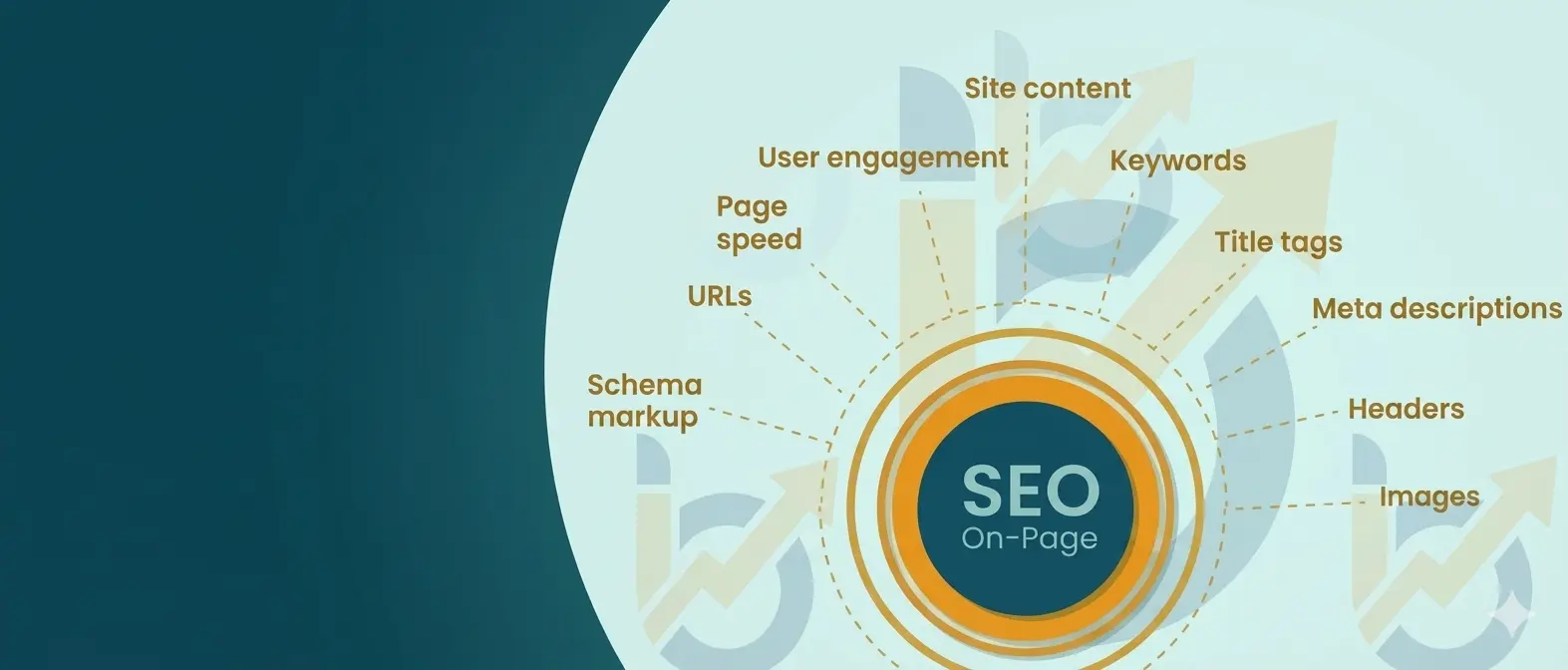
On-page SEO refers to everything within the direct control of the website owner that influences how Google evaluates and ranks individual pages. Title tags. Meta descriptions. Header structure. Keyword placement and density. Internal linking. Content quality and depth. Page speed. Mobile usability. Image optimization. Schema markup. URL structure. These are not independent checklist items that each produce a small isolated improvement. They are interconnected signals that collectively tell Google what a page is about, how authoritative it is on that topic, how well it serves the people searching for that information and whether it deserves to appear prominently in results for relevant queries. When these elements are aligned and optimized properly the cumulative effect on Google rankings improvement is measurable and often faster than businesses expect especially on pages that have existing authority from age and backlinks but poor on-page optimization that has been suppressing their ranking potential.
Title tags are one of the most direct on-page SEO ranking signals available and one of the most consistently mishandled elements across USA business websites. A title tag tells Google and the user what the page is about before anyone reads a single word of the content. It appears in search results as the clickable headline. It appears in browser tabs. It gets used by social platforms when content gets shared. Getting it right matters for ranking and for the click through rate that affects how much organic traffic the ranking actually delivers.
SEO optimization techniques for title tags are not complicated but they require attention. The primary keyword for the page belongs near the beginning of the title rather than buried at the end after several words that dilute its signal. The title should accurately describe the page content rather than being written purely for keyword inclusion at the expense of making sense to a human reader. Length matters practically because titles that exceed roughly 60 characters get truncated in search results which breaks the headline for users and wastes the opportunity the title tag represents. These are fixable issues on most websites within hours and the Google SEO strategies around title optimization are well established enough that implementing them properly produces ranking improvement on a timeline that other SEO investments rarely match.
Google uses the header structure of a page to understand how content is organized and what the primary and secondary topics of the page are. H1 headers signal the main topic. H2 and H3 headers signal subtopics and supporting content areas. A page with a clear logical header hierarchy is easier for Google to categorize accurately than one where headers are used inconsistently or decoratively without regard for the structural signal they send. On-page SEO tips around header structure consistently emphasize using the primary keyword in the H1, incorporating secondary and related keywords naturally in H2 and H3 headers and maintaining a logical hierarchy that reflects how the content actually flows rather than inserting headers wherever the design looks like it needs a visual break.
For USA businesses with existing websites the header audit is frequently one of the fastest wins available in on-page SEO. Pages with strong content buried under weak or missing header structure often see meaningful Google rankings improvement within weeks of restructuring simply because Google can now categorize the page accurately rather than making its best guess about what the content is primarily about.
SEO best practices around content have shifted significantly over the last several years and the shift is worth understanding clearly. Google has become substantially better at evaluating whether content genuinely addresses the topic it claims to address versus content that mentions a keyword repeatedly while providing limited actual value to the reader. Keyword stuffing produced results a decade ago. Today it suppresses rankings and in extreme cases triggers manual penalties. The approach that works in the current Google environment is writing content that thoroughly covers a topic in a way that serves the person reading it while integrating the primary and secondary keywords naturally at a density that reflects genuine topical relevance rather than forced repetition.
Website optimization for content quality means asking whether each page on the site would satisfy the search intent of someone who found it through the relevant query. Not whether the keyword appears the right number of times but whether the person who clicked from a search result got the information they were looking for clearly and completely. Pages that satisfy search intent perform better over time because user behavior signals like time on page, scroll depth and return to search rates feed back into how Google evaluates the quality of the result it served. SEO for higher rankings in 2026 is substantially about earning those positive user signals rather than just meeting technical keyword criteria.
Some on-page SEO improvements produce faster results than others and understanding which ones to prioritize first matters for USA businesses that need to see movement on a reasonable timeline. Page speed is one of the highest impact technical fixes available because Google uses Core Web Vitals as a direct ranking signal and slow pages are penalized across desktop and mobile results simultaneously. Image compression, lazy loading, server response time improvements and eliminating render blocking resources are all implementable on most sites without major development work and the ranking impact of moving from poor to good Core Web Vitals scores is often visible within weeks of implementation.
Mobile usability is another fast SEO results opportunity for sites that have not been properly optimized for mobile experience. Google indexes the mobile version of pages primarily and a site that provides a poor mobile experience is fighting its own rankings regardless of how strong the content or backlink profile might be. Fixing mobile usability issues is frequently a development task that takes days rather than months and the ranking improvement that follows can be among the most significant gains a website sees from any single on-page SEO investment.
Internal linking done properly distributes page authority throughout a site and signals to Google which pages are most important. Most websites have significant internal linking gaps where strong pages are not pointing to weaker pages that would benefit from the authority transfer. Mapping and implementing a proper internal linking structure is an improved website ranking tactic that produces results faster than building external links because you are working with authority the site already has rather than waiting to earn new authority from external sources.
Schema markup is structured data added to a page that helps Google understand the content more precisely and in some cases qualifies the page for rich result features in search results. Review stars. FAQ dropdowns. How-to steps. Product pricing and availability. These enhanced search result formats improve both visibility and click through rates significantly compared to standard organic results and they are directly available to any USA business that implements the relevant schema correctly on qualifying pages. Google SEO strategies that ignore schema are leaving a meaningful visibility advantage on the table especially for businesses in competitive local markets where rich results create visual differentiation from competitors showing standard results.
IB2Marketing SEO Services covers all of this for USA businesses. Title tag optimization. Header restructuring. Content quality improvement. Technical performance fixes. Internal linking strategy. Schema implementation. The full on-page SEO framework applied systematically to produce the kind of Google rankings improvement that compounds over time rather than producing a temporary spike followed by regression.
On-page SEO is not the glamorous part of search optimization. It does not have the story of a big link building campaign or the drama of an algorithm recovery. What it has is a consistent measurable impact on rankings when it is done properly and ignored costs that show up quietly in suppressed positions and lost organic traffic for pages that should be ranking significantly better than they are. For USA businesses serious about improving website ranking the on-page foundation is where that work starts. Every other SEO investment performs better when the on-page signals are right. Every dollar spent on content and link building produces more return when the pages receiving that investment are properly optimized to convert that investment into rankings.
Frequently Asked Questions
What is on-page SEO and why does it matter?
On-page SEO is optimizing your website’s content, structure and technical elements to improve Google rankings. IB2Marketing ensures every page is fully optimized for faster results.
How quickly can IB2Marketing improve my Google rankings?
Many on-page SEO fixes, like title tags, headers, page speed and mobile usability, can deliver noticeable ranking improvements within weeks.
Does IB2Marketing handle technical SEO as well?
Yes! We optimize Core Web Vitals, mobile usability, internal linking, schema markup and other technical elements to boost rankings effectively.
What types of businesses can benefit from IB2Marketing’s on-page SEO?
We work with businesses of all sizes in the USA, from startups to large enterprises, helping them improve visibility, traffic and conversions.
How does on-page SEO affect other SEO efforts?
Proper on-page SEO maximizes the impact of content creation and link building, ensuring every SEO investment produces stronger, faster results.
A Performance Marketing Company Delivering Results-Driven Solutions For Businesses


Have a question? We’d love to hear from you. Send us a message and we’ll get back to you as soon as possible.
Send 609-596-5511