If you are a US business owner sitting on the fence about launching or upgrading your online store, this guide is for you. E-commerce in the United States is not slowing down. It is accelerating. According to recent industry data, US e-commerce sales are projected to surpass $1.7 trillion by the end of 2026 and the businesses capturing that revenue are not the ones with the best products alone. They are the ones with the best-built online stores.
E-commerce website development has evolved dramatically. It is no longer about slapping a product catalog onto a generic template and calling it a day. Today, building an online store that actually converts visitors into buyers requires strategic planning, platform expertise, conversion-focused design and technical precision.
At IB2Marketing, we have helped businesses across Los Angeles, Chicago, Miami and cities all over the United States build online stores that do not just look good but perform. This guide breaks down everything you need to know, from choosing the right platform to understanding costs, must-have features and how to partner with the right development team.
Let us get into it.
E-commerce website development is the process of designing, building and optimizing an online store where customers can browse products or services, add items to a cart and complete purchases securely. It encompasses everything from the front-end design that customers see and interact with, to the back-end systems that handle inventory management, payment processing, order fulfillment and data security.
But here is what most generalist developers miss: e-commerce is not just web development. It is conversion engineering. Every decision, from how a product page is laid out to how many steps your checkout process has, directly impacts your revenue. A poorly built store does not just look bad. It bleeds money.
True e-commerce website development includes platform selection and setup, custom design and user experience, product catalog architecture, payment gateway integration, mobile optimization, site speed performance, SEO and content structure, third-party integrations like CRM, email marketing and ERP systems, ongoing maintenance and security compliance.
The US e-commerce market is more competitive than it has ever been and consumer expectations have never been higher. Here is what is shaping the landscape right now.
Mobile shopping now dominates. More than 70 percent of online purchases in the United States are initiated on a mobile device. If your store is not built mobile-first, you are losing sales before a customer even reaches your product page.
Page speed is a revenue driver. Research has consistently shown that even a one-second delay in page load time can reduce conversions by seven percent or more. In 2026, consumers are impatient and have endless alternatives a tap away.
Personalization is expected, not impressive. Shoppers expect your store to remember their preferences, show relevant products and offer tailored experiences. AI-driven recommendation engines and dynamic content are now table stakes for competitive stores.
Security is non-negotiable. With data breaches making national headlines regularly, US consumers are more security-conscious than ever. PCI-DSS compliance, SSL certificates and secure checkout flows are not optional features. They are requirements.
Omnichannel integration is the future. Customers discover products on Instagram, research on Google and buy on your website. Your store needs to be the central hub connecting all those touchpoints seamlessly.
If your current online store was built more than two years ago and has not been significantly updated, it is almost certainly underperforming. Now is the time to invest in proper e-commerce professional website development.
One of the most consequential decisions you will make in your e-commerce journey is choosing your platform. There is no single best answer. The right platform depends on your business size, budget, technical capabilities, product catalog complexity and growth plans.
Here are the platforms that dominate the US market and what they are best suited for.
Shopify is the most widely used e-commerce platform among US businesses for good reason. It is fast to launch, beginner-friendly and has a massive ecosystem of apps and integrations. Shopify handles hosting, security and updates automatically, which removes significant technical burden from business owners.
Shopify is ideal for small to mid-sized businesses, direct-to-consumer brands and anyone who wants to go to market quickly without deep technical resources. Shopify Plus is the enterprise tier, designed for high-volume merchants doing millions in revenue who need advanced customization, dedicated support and multi-store capabilities.
A skilled Shopify development agency can take Shopify far beyond its out-of-the-box capabilities, building custom themes, integrating enterprise back-end systems and optimizing for conversion in ways that generic Shopify stores never achieve.
WooCommerce is the open-source e-commerce plugin that powers a massive share of online stores worldwide, built on top of WordPress. If you already have a WordPress website and want to add e-commerce functionality, WooCommerce is a natural fit. It is highly customizable, has a rich plugin library and gives you full ownership of your data and code.
WooCommerce is best for content-heavy businesses, publishers who sell products, businesses with highly custom product configurations and those who want complete control over their hosting environment. The trade-off is that WooCommerce requires more technical management and a reliable hosting infrastructure to perform at scale.
WooCommerce development done right involves optimizing your database, caching configuration and server environment alongside the store itself. Many businesses have WooCommerce stores that are slow and unreliable simply because the hosting and technical setup was not done properly.
Magento, now rebranded as Adobe Commerce, is the platform of choice for large enterprises with complex catalog requirements, multiple storefronts and deep integration needs. It is a robust, feature-rich platform that can handle enormous product catalogs and sophisticated B2B commerce scenarios.
Magento development requires specialized expertise and carries higher development and maintenance costs, but for enterprise businesses with the right requirements, it delivers capabilities that simpler platforms cannot match.
BigCommerce is a strong SaaS alternative to Shopify with slightly more built-in functionality at the base level and better native support for multi-channel selling. It is a solid choice for mid-market businesses that want a hosted solution without as heavy a reliance on apps as Shopify.
Some businesses have requirements that no off-the-shelf platform can meet. Custom e-commerce development using frameworks like Next.js with headless commerce architecture, or fully bespoke solutions, makes sense for businesses with highly unique product experiences, subscription models, complex pricing rules, or specific compliance requirements.
Custom development carries a higher price tag and longer timeline but delivers exactly what your business needs without compromise.
The difference between an online store that sits there and one that generates revenue comes down to the features built into it and how well they are executed. Here are the non-negotiables.
Your product page is where the sale is won or lost. A high-converting product page includes multiple high-quality images with zoom functionality, video demonstrations where relevant, clear and benefit-focused product descriptions, social proof in the form of verified reviews and ratings, prominent and compelling calls to action, clear pricing with any financing or installment options, real-time inventory indicators and related product recommendations.
Product page optimization is both a design discipline and a conversion science. At IB2Marketing, we analyze user behavior data to continuously refine product page layouts for maximum conversion.
Cart abandonment is one of the biggest revenue leaks in e-commerce. The average cart abandonment rate in the United States hovers around 70 percent. The primary reasons customers abandon are unexpected shipping costs, forced account creation, a complicated checkout process and payment security concerns.
A properly built checkout experience addresses all of these. That means offering guest checkout, displaying trust signals prominently, showing shipping costs early in the process, enabling multiple payment methods and minimizing the number of steps and form fields required to complete a purchase.
One-page or two-step checkouts consistently outperform multi-page flows. Your development team should be A/B testing checkout variations to identify what works best for your specific audience.
US consumers expect to pay the way they want to pay. Your store needs to accept major credit and debit cards, PayPal, Apple Pay, Google Pay and increasingly, buy-now-pay-later options like Affirm, Klarna and Afterpay. Younger US consumers in particular are heavily influenced by the availability of installment payment options.
Payment gateway integration needs to be seamless, fast and secure. PCI-DSS compliance is mandatory for any store processing card payments. Your development team should ensure your payment flow is encrypted end-to-end and that no sensitive card data touches your servers unless you have the infrastructure and compliance certification to handle it.
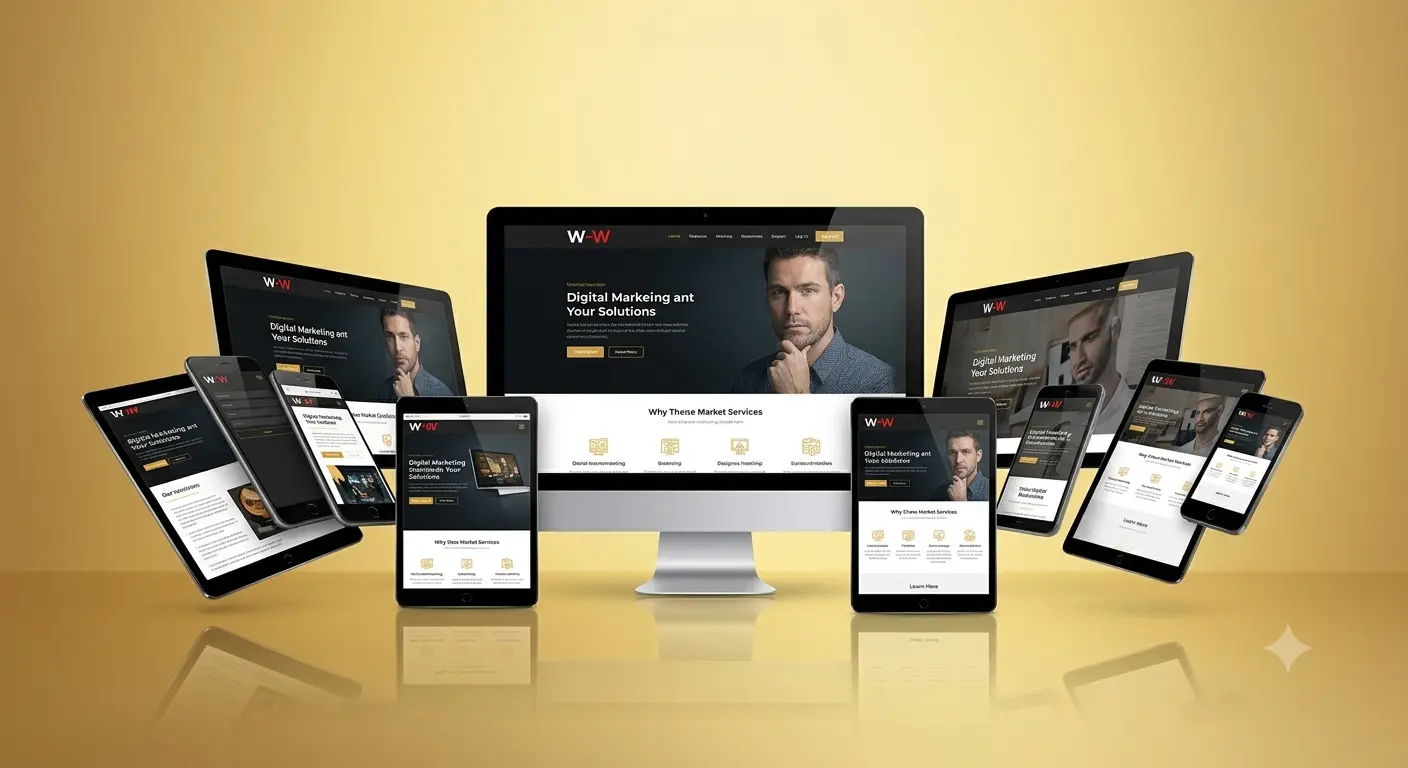
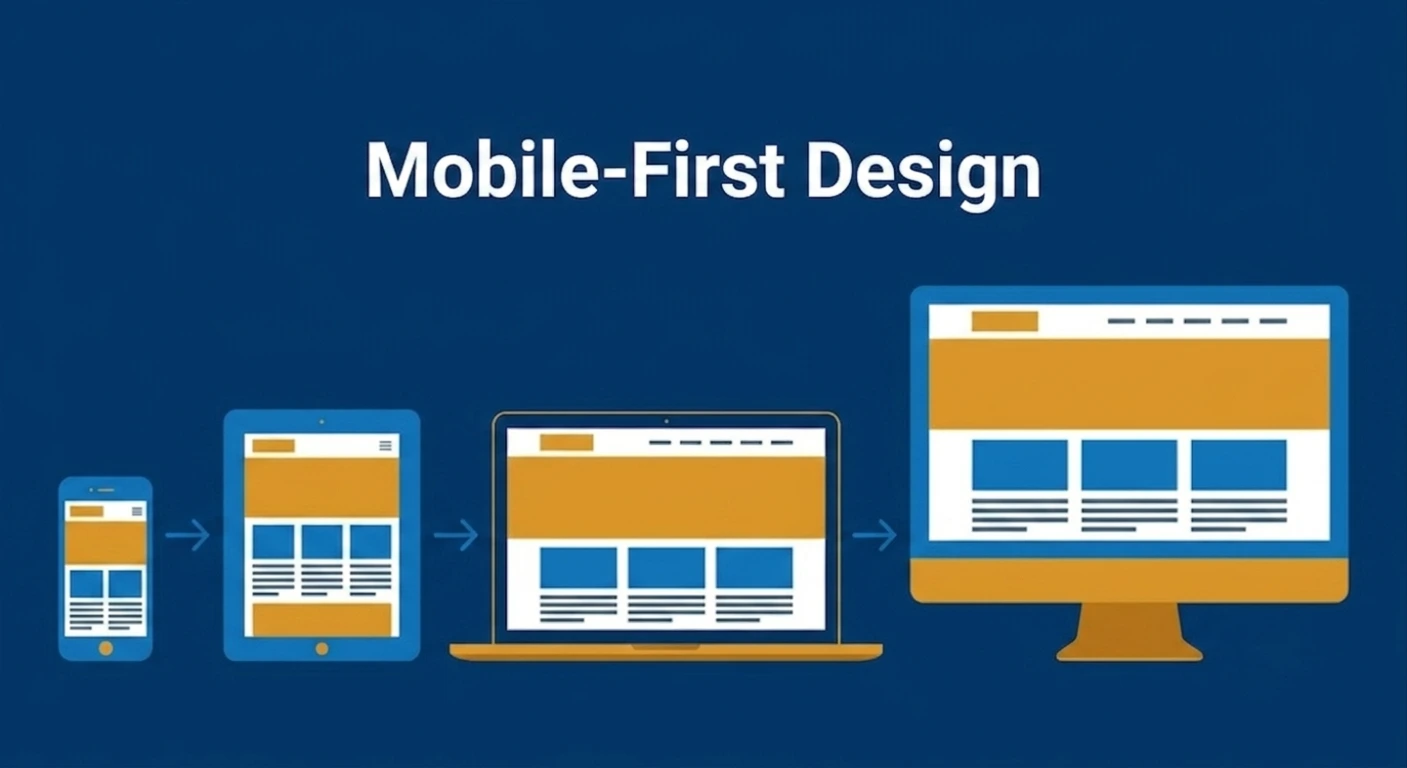
This is not optional in 2026. Your store must be designed for mobile first and then adapted for desktop, not the other way around. Mobile-first design means touch-friendly navigation, appropriately sized tap targets, fast load times on cellular connections, simplified checkout flows and images optimized for mobile screen resolutions.
A store that performs beautifully on desktop but frustrates mobile users is leaving the majority of its potential revenue on the table.
Google uses Core Web Vitals as a ranking factor, meaning a slow store hurts both your conversion rate and your search engine visibility. Fast e-commerce websites use optimized image compression, browser caching, content delivery networks, minimized JavaScript and efficient hosting infrastructure.
Site speed is one area where working with a specialized e-commerce developer pays dividends far beyond what general web developers can deliver. Shaving two seconds off your load time can meaningfully increase both your organic search rankings and your conversion rate simultaneously.
Serious e-commerce businesses need their online store connected to their inventory management system. Whether you use a simple WooCommerce inventory tracker or integrate with a full warehouse management system via API, your store should display accurate stock levels, prevent overselling and trigger reorder alerts automatically.
Real-time inventory accuracy protects your reputation. Nothing destroys customer trust faster than confirming an order and then emailing to say the item is out of stock.
Customers who use your site search convert at dramatically higher rates than those who browse. Investing in a powerful search experience with autocomplete, typo tolerance, filtering and sorting capabilities is one of the highest-ROI improvements you can make to an existing store.
Category navigation should be intuitive and hierarchical, allowing customers to narrow down large catalogs quickly. Faceted filtering, breadcrumb navigation and smart category landing pages all contribute to a better shopping experience and higher conversion rates.
Let us address the question every business owner asks: how much does it cost to build an e-commerce website?
The honest answer is that costs vary significantly based on your platform choice, the complexity of your requirements and the expertise of your development partner. Here is a realistic breakdown for the US market in 2026.
Basic Shopify or WooCommerce Store: $3,000 to $10,000. This covers a professionally designed theme with customization, basic product setup, payment and shipping configuration and fundamental SEO setup. Suitable for businesses launching their first online store with a manageable catalog and straightforward requirements.
Mid-Market E-Commerce Build: $10,000 to $50,000. This range covers custom design, advanced functionality, third-party integrations, performance optimization and a more sophisticated feature set. Appropriate for established businesses scaling their online channel or replacing an underperforming existing store.
Enterprise E-Commerce Development: $50,000 to $500,000 and above. Enterprise builds involve complex integrations, custom platform development or significant platform extension, multi-store or multi-region capabilities and dedicated project teams. Magento, headless commerce architectures and highly customized Shopify Plus implementations fall into this category.
Ongoing costs to factor in include your platform subscription fees, hosting costs, payment processing fees typically ranging from 0.5 to 2.9 percent per transaction depending on your processor and volume, app or plugin subscription costs and ongoing development and maintenance retainers.
Working with a specialized e-commerce agency like IB2Marketing means you get a team that understands both the technical build and the commercial outcomes you are chasing. Generic freelancers may offer lower hourly rates, but a specialist agency delivers a store built to generate revenue, not just look pretty.
No guide to e-commerce website development would be complete without addressing search engine optimization. Your store can be beautifully designed and perfectly built, but if customers cannot find it through organic search, you are entirely dependent on paid advertising to drive traffic.
E-commerce SEO is a discipline unto itself. It involves keyword-optimized product and category page content, structured data markup for rich search results, technical SEO including proper URL structures and canonical tags, site architecture that distributes link equity effectively, image optimization with descriptive alt tags and content marketing to attract top-of-funnel organic traffic.
The relationship between site speed and SEO is direct. Google's Core Web Vitals algorithm factors load speed, visual stability and interactivity into search rankings. A slow store ranks lower. A lower ranking means less organic traffic. Less organic traffic means more dependence on paid ads to hit revenue targets.
At IB2Marketing, our e-commerce builds are developed with SEO baked in from day one, not bolted on as an afterthought. Our SEO services team works alongside our development team to ensure your store launches with a strong technical SEO foundation. If you want to explore how SEO strategy complements your e-commerce investment, our dedicated SEO services can help you build long-term organic visibility alongside your new store.
The agency or developer you choose to build your online store will have a profound impact on your business for years to come. A great partner delivers not just a website, but a commercial asset. Here is what to look for.
E-Commerce Specialization: Not all web developers are e-commerce developers. Look for a partner with a proven track record of building online stores, not just websites. Ask to see their portfolio of e-commerce projects specifically.
Platform Expertise: If you have decided on Shopify, work with a Shopify agency. If WooCommerce is your path, find a team that has built and optimized WooCommerce stores at scale. Platform expertise is not interchangeable.
Commercial Understanding: Your development partner should think like a marketer, not just a coder. They should ask questions about your target customers, your conversion goals, your average order value and your competitive landscape. If all they ask about is technical specifications, that is a red flag.
References and Case Studies: Ask for references from past clients in similar industries. Ask about measurable outcomes, not just deliverables. Did conversion rates improve? Did page load times improve? Did organic search traffic grow after launch?
Post-Launch Support: Building your store is the beginning, not the end. Ensure your partner offers ongoing maintenance, performance monitoring and development support after launch. E-commerce stores require continuous attention to remain competitive.
Transparent Pricing: Be cautious of partners with opaque pricing. A reputable agency should be able to give you a detailed project proposal with clear deliverables and costs. Vague quotes lead to scope creep and budget overruns.
At IB2Marketing, we take a performance-first approach to every e-commerce project we touch. We do not build stores. We build revenue engines.
Our process begins with a deep discovery phase where we understand your business model, your customers, your competitive market and your commercial goals. We do not start designing until we understand what winning looks like for your specific business.
From there, our design team develops conversion-focused user experiences grounded in buyer psychology and e-commerce best practices. We build for mobile first, optimize for speed from the first line of code and integrate SEO structure throughout the entire build.
Our development team specializes in Shopify, WooCommerce and custom headless commerce architectures. We have delivered e-commerce projects for clients across Los Angeles, Chicago, Miami and nationally, helping businesses in retail, fashion, health and wellness, home goods, B2B and more scale their online revenue.
After launch, we stay with you. Our ongoing support and optimization services ensure your store continues to improve over time, with regular performance reviews, conversion rate optimization testing and technical maintenance to keep everything running at peak performance.
We are not a transactional development shop. We are a long-term growth partner for US businesses serious about e-commerce.
Before you brief any development partner, it is worth understanding the most common and costly mistakes businesses make when building their online stores.
Choosing a platform based on price alone. The cheapest platform is rarely the right platform for your business. Choose based on fit with your requirements, not the lowest monthly fee.
Skipping user research. Assumptions about how your customers shop often turn out to be wrong. Even basic user testing and customer journey mapping before development begins can prevent expensive redesigns later.
Neglecting mobile checkout. Businesses optimize their desktop experience and ignore the friction their mobile checkout creates. Test your checkout on five different mobile devices before launch.
Launching without analytics properly configured. You cannot improve what you cannot measure. Google Analytics 4, heat mapping tools and funnel tracking should be configured and tested before your store goes live.
Treating SEO as an afterthought. If your store launches without proper SEO structure, you are starting with a handicap that may take months to correct. Insist on SEO integration from day one.
Underestimating ongoing investment. Your store launch is day one, not the finish line. Budget for continuous improvement, content development and technical maintenance.
If you are serious about e-commerce, you need more than a website. You need a strategically built, technically sound, conversion-optimized online store that works as hard as you do.
At IB2Marketing, we have the platform expertise, commercial mindset and proven track record to deliver exactly that for US businesses. Whether you are launching your first store, migrating from an underperforming platform, or scaling an enterprise operation, we have the experience to get you there.
The first step is a free strategy call where we learn about your business, assess your current situation and outline exactly what a high-performance e-commerce build could look like for you. No pressure, no sales scripts, just an honest conversation about what it takes to win online in 2026.
Start Your E-Commerce Project, Book Your Free Strategy Call Today.
Visit us at IB2Marketing and let us build the online store your business deserves.
What does IB2Marketing include in an e-commerce website development project?
Every IB2Marketing e-commerce project includes platform setup and custom design, product catalog architecture, payment gateway and shipping integration, mobile optimization, site speed tuning for Core Web Vitals, SEO foundation setup and pre-launch testing. We also offer post-launch support, conversion rate optimization and ongoing maintenance retainers. We treat your store as a living commercial asset, not a one-time deliverable.
How long does it take IB2Marketing to build an e-commerce website?
Timelines depend on the scope and complexity of your project. A focused Shopify or WooCommerce store with a defined product catalog typically takes six to ten weeks from kickoff to launch. Mid-market builds with custom features and third-party integrations generally run ten to eighteen weeks. Enterprise builds are scoped individually during discovery. We always provide a detailed project timeline before work begins so you know exactly when to expect your launch.
Which e-commerce platform does IB2Marketing recommend for US businesses?
Our recommendation always depends on your specific business situation. For most US businesses launching or scaling an e-commerce channel, Shopify offers the best balance of ease, reliability and performance. WooCommerce is our recommendation for content-heavy businesses already on WordPress or those requiring deep customization without platform subscription costs. Shopify Plus and headless commerce architectures serve enterprise clients with more complex requirements. We help you evaluate the options honestly during our free strategy call.
Can IB2Marketing improve my existing online store, or do you only build new ones?
Absolutely. Many of our most impactful projects involve taking an existing underperforming store and transforming it. Whether that means a design overhaul, a platform migration, checkout optimization, speed improvements, or adding new integrations, we can assess your current store and identify exactly where revenue is being lost. Sometimes a full rebuild is the right answer. Often, targeted improvements deliver significant results faster and for less investment.
How does IB2Marketing approach e-commerce SEO as part of website development?
We build SEO in from day one, not as a retrofit. Our development process includes URL structure planning, on-page SEO for product and category pages, structured data markup for rich search results, image optimization with descriptive alt tags, internal linking architecture and Core Web Vitals performance optimization. For clients who want to build long-term organic visibility beyond the technical foundation, our dedicated SEO services team can develop and execute a full content and link-building strategy to grow your organic search channel over time.
A Performance Marketing Company Delivering Results-Driven Solutions For Businesses

Have a question? We’d love to hear from you. Send us a message and we’ll get back to you as soon as possible.
Send 609-596-5511